
Quick Summary
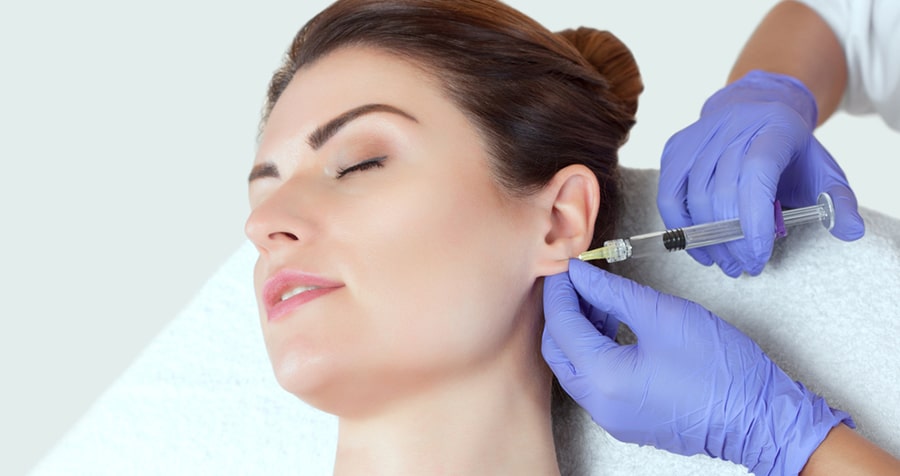
- Earlobe repair without surgery is a quick day-care procedure performed under local anaesthesia.
- Most repairs take about 20 minutes.
- Patients remain awake throughout the treatment and return home the same day.
- Hair-thin sutures help restore the natural shape of the earlobe with minimal visible scarring.
- This article follows a real patient treated by Dr. Sheetal Mithran and explains the earlobe repair before and after journey, from the initial consultation to recovery.
Searching for Earlobe Repair Before and After Results? Here’s What You Should Know
If you’re searching for earlobe repair before and after results, you’re probably wondering whether a stretched or torn earlobe can look natural again. Many patients want to know what changes after the procedure, how long healing takes, and whether they’ll be able to wear earrings again.
The good news is that earlobe repair is a quick, minimally invasive procedure performed under local anaesthesia. Patients usually return home the same day with very little downtime.
However, once scar tissue has formed, the earlobe won’t heal or close naturally. A minor cosmetic repair is needed to restore its normal appearance.
Let’s look at a real patient treated by Dr. Sheetal Mithran to understand what happens before and after earlobe repair and what you can expect during recovery.
A Real Patient Case: Repairing a Stretched Earlobe at 42
A 42-year-old woman visited Dr. Sheetal because one of her earlobes had gradually stretched after years of wearing earrings.
There had been no injury or sudden tear. Instead, the piercing slowly became long and uneven, making her uncomfortable wearing many of her favourite earrings.
Like many patients, she hoped the hole would close if she stopped wearing earrings. Unfortunately, once the skin stretches and scar tissue develops, it cannot heal back on its own.
That’s why many people eventually consider earlobe repair.
Earlobe Repair Before and After: What Changed for This Patient
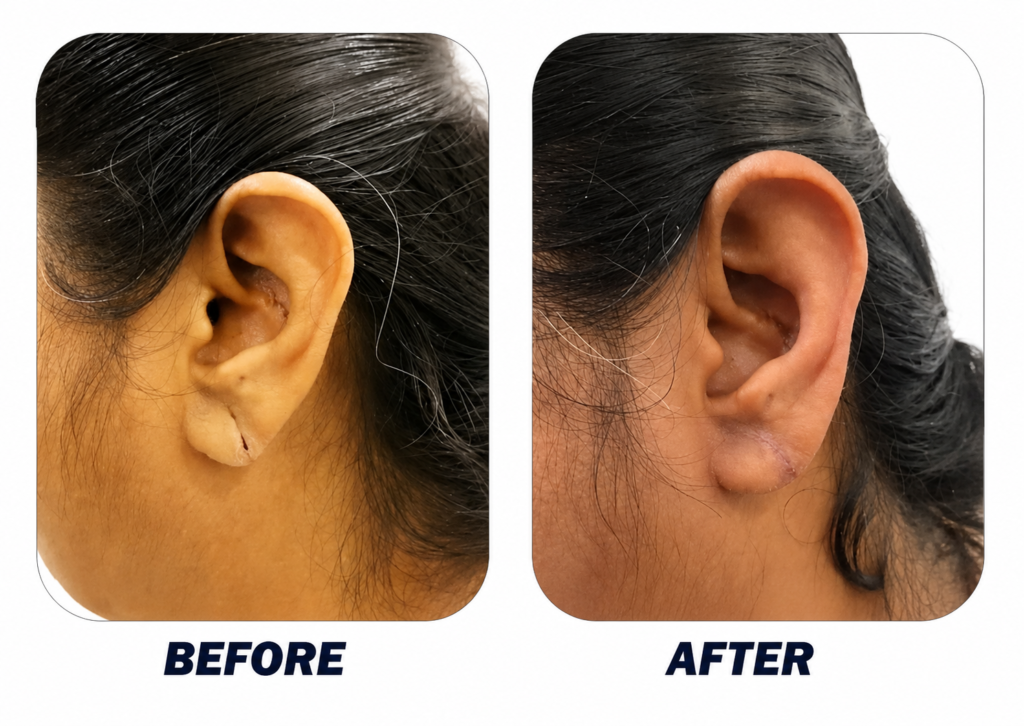
Before the procedure, the patient’s earlobe had gradually stretched after years of wearing earrings. The enlarged piercing affected both the appearance of the earlobe and the way earrings sat comfortably.
After the repair, the stretched opening was carefully closed using fine hair-thin sutures, allowing the earlobe to heal into a more natural shape. While every patient’s healing journey is unique, the goal of earlobe repair before and after treatment is to restore the natural contour of the earlobe with minimal visible scarring and allow patients to wear earrings again once healing is complete.
Why Do People Search for “Earlobe Repair Without Surgery”?
The word surgery often makes people think of hospital admission, general anaesthesia, and a long recovery.
Fortunately, earlobe repair is much simpler.
Only the earlobe is numbed with local anaesthesia, allowing patients to remain awake and comfortable throughout the procedure. The treatment usually takes about 20 minutes, and patients return home the same day.
Although it is technically a minor cosmetic procedure, it doesn’t involve major surgery or hospital admission, which is why many people describe it as earlobe repair without surgery.
What Actually Happens During the Repair?
Knowing what happens during the procedure often helps patients feel more confident.
Step 1: Local Anaesthesia
A small amount of local anaesthetic is injected into the earlobe to numb the treatment area. The patient remains awake and feels no pain during the repair.
Step 2: Removing the Scar Tissue
The stretched piercing contains scar tissue that won’t heal properly. Dr. Sheetal carefully removes this tissue to expose healthy skin, allowing better healing.
Step 3: Reshaping the Earlobe
The healthy edges of the earlobe are precisely brought together to recreate a natural, symmetrical shape.
Step 4: Hair-Thin Sutures
Very fine sutures are placed on both the front and back of the earlobe. These support healing while helping minimise visible scarring.
Step 5: Procedure Complete
The entire repair takes around 20 minutes, and patients return home shortly afterwards.
Earlobe Repair Before and After Recovery: What to Expect
Recovery is usually straightforward.
Some mild redness, swelling, or tenderness during the first few days is completely normal. Since only local anaesthesia is used, most patients resume normal daily activities soon after treatment.
Patients should avoid pressure on the ear and refrain from wearing earrings until healing is complete.
Dr. Sheetal also provides personalised aftercare instructions to support the best cosmetic result.
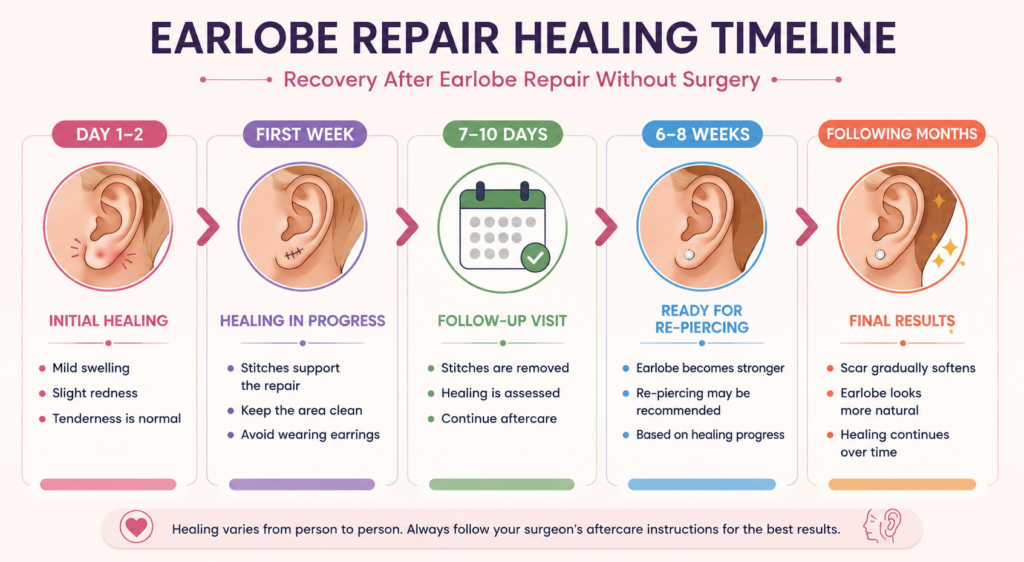
Recovery Timeline: What to Expect
| Recovery Stage | What You Can Expect |
| Day 1–2 | Mild swelling and redness are normal. |
| First Week | The earlobe begins healing while stitches support the repair. |
| 7–10 Days | Stitches are usually removed. |
| 6–8 Weeks | Re-piercing may be considered if recommended. |
| Following Months | The scar gradually softens and becomes less noticeable. |
.
Why Does Dr. Sheetal Use Hair-Thin Sutures?
Hair-thin sutures allow the skin edges to be joined with exceptional precision.
Their benefits include:
- Better healing
- Less tension on the tissue
- Reduced visible scarring
- A smoother cosmetic result
In this patient’s case, fine sutures were placed on both the front and back of the earlobe to provide balanced support during healing.
Can You Wear Earrings Again?
Yes, in most cases.
Once healing is complete, Dr. Sheetal will advise when it’s safe to re-pierce the earlobe, usually around 6 to 8 weeks after the procedure.
The new piercing is typically placed slightly away from the repaired area to maintain the strength of the repair and reduce the risk of future stretching.
Why Patients Choose Dr. Sheetal’s Aesthetic Clinic
Many patients delay treatment because they assume it involves major surgery. They’re often surprised to learn that earlobe repair is a quick outpatient procedure performed:
- Under local anaesthesia
- In a comfortable clinic setting
- In about 20 minutes
- Without hospital admission
- As a same-day procedure
Along with the repair, Dr. Sheetal provides personalised aftercare and follow-up guidance to ensure the best possible healing.
For Dr. Sheetal, earlobe repair is about more than closing a stretched piercing—it’s about restoring confidence and helping patients enjoy wearing earrings again.
Ready to Repair Your Earlobe?
Whether your earring hole has stretched gradually over the years or torn unexpectedly, you don’t have to live with it permanently.
Book a consultation with Dr. Sheetal Mithran at Dr. Sheetal’s Aesthetic Clinic, Madurai, to understand your treatment options, discuss the procedure in detail, and receive a personalised treatment plan designed to restore the natural appearance of your earlobe.
Frequently Asked Questions
Is the procedure painful?
No. The earlobe is numbed with local anaesthesia before the repair begins, so patients generally don’t experience pain during treatment. Mild soreness afterwards is normal and settles within a few days.
How long does earlobe repair take?
Most single earlobe repairs take approximately 20 minutes.
Can both earlobes be repaired during the same visit?
Yes. If both earlobes require repair, they can usually be treated during the same appointment after assessment.
How long does it take to heal?
Initial healing usually takes about one to two weeks. Complete healing continues over several weeks, and re-piercing is generally considered after 6 to 8 weeks.
Can a stretched earring hole heal naturally?
No. Once the piercing has stretched significantly and scar tissue has formed, it will not close on its own. A minor repair is needed to restore the natural shape of the earlobe.
How much does earlobe repair without surgery cost in Madurai?
The cost depends on whether one or both earlobes need repair, the condition of the tissue, and the personalised treatment plan recommended after your consultation. During your visit, Dr. Sheetal will examine your earlobe, explain the treatment in detail, and provide a transparent cost estimate before the procedure.
Can I wear earrings after the repair?
Yes. Once healing is complete, most patients can have their ears re-pierced. Dr. Sheetal will recommend the safest time and position for the new piercing
