
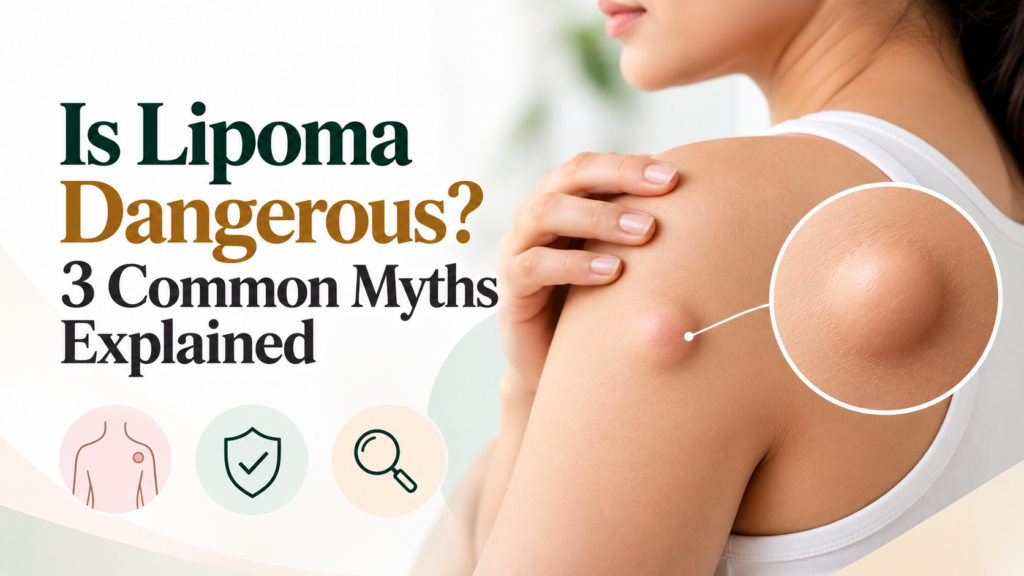
By Dr. Sheetal Mithran, MBBS, MS, M.Ch
Finding a fatty lump on your body can raise several questions. Is it cancerous? Could it become dangerous if left untreated? Can creams or oils make it disappear?
A lipoma is a benign growth made up of fat cells. Many confirmed lipomas do not require removal. However, an unexplained lump should be medically assessed before assuming that it is a lipoma.
Here are three common lipoma myths, explained using Dr. Sheetal Mithran’s original educational content.
Quick Summary
- A lipoma is a benign, non-cancerous fatty growth.
- Not every confirmed lipoma needs surgery.
- An unexplained lump should be examined to establish its diagnosis.
- Creams and oils should not replace medical assessment or appropriate treatment.
- A lump that grows rapidly, becomes hard or causes pain needs reassessment.
Myth 1: Is a Lipoma a Cancerous Lump?
Fact: A lipoma is a benign fatty tumour, not a cancerous growth.
The word “tumour” can sound worrying, but it does not always mean cancer. A lipoma is a growth of fat cells that is classified as benign.
However, not every lump beneath the skin is necessarily a lipoma. Its appearance alone cannot establish the diagnosis.
If a lump grows unusually quickly, becomes hard or starts causing pain, it should be properly evaluated. These changes do not automatically mean cancer, but they should not be ignored.
The first step is to confirm what the lump actually is.
Myth 2: Will a Lipoma Turn Into Cancer if It Is Not Removed?
Fact: A confirmed conventional lipoma does not routinely need removal to prevent cancer.
A common misconception is that every lipoma must be removed because it could otherwise become cancerous.
Dr. Sheetal’s explanation highlights an important distinction: a confirmed lipoma is different from a lump that has never been examined.
The concern is that someone may assume an unexplained lump is a lipoma and leave it unchecked. This can delay the correct diagnosis if the lump is something else.
Not every confirmed lipoma requires surgery. Following assessment, a doctor can explain whether observation or treatment is appropriate.
An existing diagnosis should also not be used as a reason to ignore later changes. A lump that grows or develops new symptoms should be reassessed.
Myth 3: Can Creams or Oils Dissolve a Lipoma?
Fact: Creams, oils and lotions should not be relied on to remove a lipoma.
Some people try topical products or home remedies hoping to dissolve a fatty lump.
In her original explanation, Dr. Sheetal advises against relying on creams and oils as lipoma treatment. Trying these products should not replace a medical examination or delay assessment of a changing lump.
If removal is appropriate, surgical excision may be discussed after the diagnosis has been established. The decision should include a discussion of the expected benefits, alternatives and relevant risks.
Lipoma Myths vs Facts
| Common myth | What you should know |
| A lipoma is cancerous. | A lipoma is a benign fatty growth, but an unexplained lump needs assessment. |
| Every lipoma must be removed to prevent cancer. | Many confirmed lipomas can be observed without surgery. |
| Creams and oils can replace lipoma treatment. | Topical products should not replace diagnosis or appropriate medical care. |
Does Every Lipoma Need Surgery?
No. Not every confirmed lipoma needs to be removed.
The decision depends on the individual assessment, including whether the lump is changing or causing symptoms. Observation may be appropriate when a confirmed lipoma is not causing problems.
If removal is considered, discuss:
- Why removal is being recommended.
- Whether observation remains an option.
- What the procedure involves.
- Possible scarring and other relevant risks.
- What follow-up may be needed.
The aim is to make an informed decision based on the diagnosis and individual circumstances.
When Should a Lump Be Medically Evaluated?
Have a new or unexplained lump examined rather than assuming that it is harmless.
Arrange reassessment if an existing lump:
- Grows unusually quickly.
- Becomes hard.
- Starts causing pain.
- Changes after an earlier medical assessment.
These signs cannot establish a diagnosis on their own. A medical examination helps determine whether further investigation is necessary.
Frequently Asked Questions About Lipoma
Is a lipoma dangerous?
A confirmed lipoma is generally harmless. However, a new, unexplained or changing lump should be medically assessed.
Is a lipoma cancerous?
No. A lipoma is a benign fatty growth. The important step is confirming that the lump is actually a lipoma.
Must a lipoma be removed to prevent cancer?
A confirmed conventional lipoma does not routinely require removal to prevent cancer. A doctor can assess whether observation or treatment is appropriate.
Can creams or oils remove a lipoma?
Dr. Sheetal advises against relying on creams, oils or lotions to dissolve a lipoma. They should not replace medical assessment or appropriate treatment.
Does every lipoma need surgery?
No. Some confirmed lipomas can be observed. The decision depends on the medical assessment and whether the lump is causing problems.
Should a previously diagnosed lipoma be checked again?
Yes, if it grows unusually quickly, becomes hard, starts causing pain or otherwise changes. A previous diagnosis does not remove the need to assess new symptoms.
Key Takeaway
A lipoma is a benign fatty growth, and many confirmed lipomas do not require removal.
The essential step is to establish what a lump actually is before deciding whether treatment is needed. Avoid relying on home remedies or assuming that every fatty lump is a lipoma.
About the Author
Dr. Sheetal Mithran, MBBS, MS, M.Ch
Cosmetic & Plastic Surgeon
Dr. Sheetal Aesthetics, Madurai
Registration status: Registered Medical Practitioner
Tamil Nadu Medical Council Registration No.: 88650
Adapted from Dr. Sheetal Mithran’s original educational explanation about lipoma myths, supplied for this article.
This article provides general health information and does not replace an individual medical examination, diagnosis or treatment plan.
